Standing Up Against Opression
Resistindo à Opressão


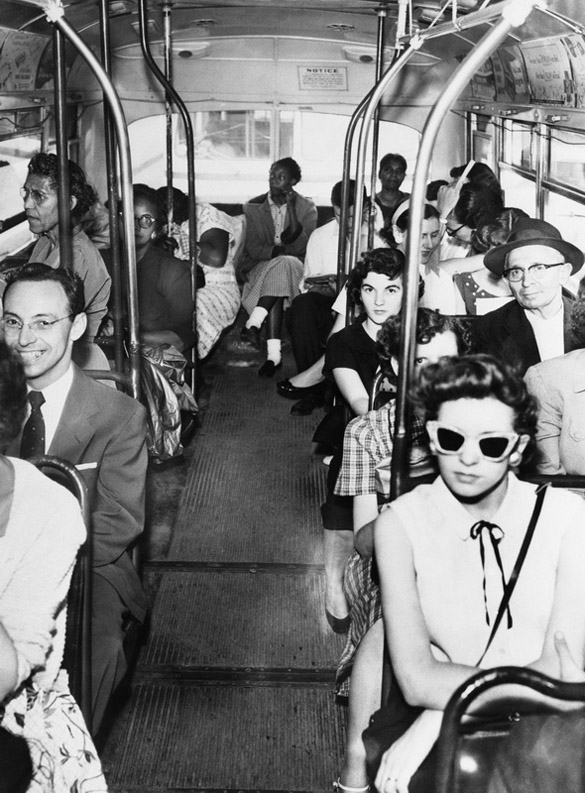
On December 1, 1955, in Montgomery, Alabama, African-American Rosa Parks refused to obey the bus driver's order (then following both state and municipal laws) that she give up her seat in the colored section to a white passenger, after the white section was filled.
Though arrested and prosecuted, that didn't stop the anti-racist movement across the country of gathering momentum: the massive majority of black people in town adhered to a boycott to the buses (amounting to enormous profit losses to the bus company) that would last more than a year - until the abhorrent laws were finally eliminated.
Though arrested and prosecuted, that didn't stop the anti-racist movement across the country of gathering momentum: the massive majority of black people in town adhered to a boycott to the buses (amounting to enormous profit losses to the bus company) that would last more than a year - until the abhorrent laws were finally eliminated.
Her legacy as "The First Lady of Civil Rights" proves to be as current as it can be, inspiring people through the generations, as President Obama himself, seen here inside the now-famous bus No. 2857, now displayed at the Henry Ford Museum.
Em 1 de dezembro de 1955, in Montgomery, Alabama, a afro-americana Rosa Parks recusou-se a obedecer as ordens do motorista (então cumprindo leis estadual e municipal) para que ela cedesse seu lugar na seção negra do ônibus à um passageiro branco, após a ala branca do ônibus lotar.
Apesar de presa e condenada, isso não evitou que o movimento anti-racismo ganhasse força no país: a grande maioria da população negra em Montgomery aderiu a um boicote aos ônibus (levando a empresa de transportes a enormes prejuízos) que durou mais de um ano, até que as famigeradas leis fossem abolidas de vez.
Hoje seu legado como a "Primeira-Dama dos Direitos Humanos" repercurte como mais moderno que nunca, inspirando pessoas como o Presidente Obama, aqui sentado no famoso ônibus nr. 2857, em exibição no Museu Henry Ford.